



What Matters After the First Conversation With an AI Girlfriend?
Search for an AI girlfriend and you quickly run into character galleries, “best” lists, and free-trial promises. They turn the choice into a contest between personalities and feature counts. But the useful question starts after the novelty of the first chat: which role should the character play, what should carry into the next session, what can you control, and where should the interaction live? Those four decisions say more about long-term fit than a polished opening conversation or an unsupported ranking.
What Is an AI Girlfriend?
In practice, an AI girlfriend usually means an AI character designed to take on an affectionate, romantic, or relationship-oriented role through conversation. That experience may involve text, voice, images, an animated avatar, or a 3D character, but no single feature defines the category.
Here, “girlfriend” describes the intended role and tone. It does not reveal which AI model generates replies, how long the system retains context, whether memories can be corrected, what permissions it requests, or whether it runs in a browser, an app, or separate hardware. Think of an AI girlfriend as one role within the broader AI companion category—not as a particular technology, and not as a human relationship or therapeutic service.
Start With the Role You Want the Character to Play
Start with a simpler question: what do you actually want to come back to? Some people want light conversation at the end of the day. Others want affectionate roleplay, an original character with specific lore, or a familiar persona that can carry a longer story forward. Those are different jobs, even when products give them the same label.
Write down the role, tone, and boundaries that matter. Should the character be playful or calm? Should it initiate topics or mostly respond? Do you want one continuing persona, or the freedom to switch characters often? A large catalog helps with exploration, but it may matter much less once you have found a character you want to keep.
Now imagine returning after several days. The test is not whether the system produces another charming reply; it is whether the role, tone, and relevant shared details remain recognizable. Some readers will be happy with a quick chat that starts cleanly each time. Others will care far more about continuity—and should look closely at what the product means by “memory” before committing.
Where the Interaction Lives Is a Separate Choice
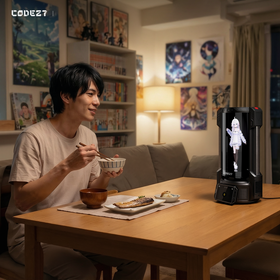
The role and the form are separate decisions. An AI girlfriend can live in a browser or mobile app, appear through an animated desktop interface, or use dedicated hardware. One way to describe the hardware option is a dedicated 3D companion: a standalone device that gives a customizable virtual character a fixed, visible, interactive place in physical space. The CODE27 3D Companion Hub is one implementation. That form does not automatically make the AI smarter, the memory more accurate, or the data more private. What it changes is where the interaction happens and the level of commitment it asks from you.
A browser or app is usually easier to try, more portable, and less demanding of space. It can also be more discreet when you want to keep the interaction on a personal screen. For a closer look at the architecture, read how a character hub differs from a chatbot app.
A persistent avatar or device makes a different tradeoff. It can give the character a stable visual place and make voice, movement, or expressions part of the routine. In return, it introduces setup, permissions, network requirements, and possibly hardware cost. The guide to screen pets, AI assistants, and dedicated companion formats compares these forms in more detail.
Compare the Experience, Not Just the Feature List
Once you know the role and form you want, look at what happens over time. Feature pages often compress several different capabilities into words such as “memory,” “customization,” or “private.” Treat each label as the start of a question, not a complete answer.
Continuity: What Carries Into the Next Conversation?
Following the conversation now is not the same as remembering something next week. A product might keep recent messages in its current context, save selected facts to a profile, summarize earlier chats, or retrieve longer-term memories when relevant. The replies can look similar even when the underlying continuity is very different.
Ask what is retained, for how long, and under which account or character. Can you view, correct, or delete saved information? Does resetting a conversation also clear memory? If a service simply says it “remembers you,” look for a support page or settings screen that explains the claim. More retention may make later conversations feel more familiar, but it also leaves more stored information for you to review for errors and privacy.
Control: What Can You Change, Inspect, or Delete?
The settings that shape a character are not the same as the controls that govern your data. Persona settings affect behavior, tone, backstory, and conversational boundaries. An avatar or model controls appearance, while voice options affect presentation. None of these automatically gives you control over chat history, saved memories, or account data.
Look for the controls that matter in practice. Can you edit the persona after creation, change the visual character without losing the role, inspect stored memories, export conversations, or delete individual records? What happens when you close the account? A “create your own AI girlfriend” promise may mean writing a short description, selecting a generated image, or importing a compatible model. Those are not equivalent levels of ownership or customization.
If you plan to use an original 3D character, learn how VRM characters work before judging compatibility. A VRM file is a visual model, not the character’s AI or persona. Technical compatibility also does not grant permission to use someone else’s art, model, story, or voice.
Friction: What Does the Experience Cost to Keep Using?
The lasting cost rarely sits in one price tag. An AI girlfriend app may offer a free starting tier while limiting longer conversations, images, voice, or memory. A subscription may remove some limits while leaving other features separate. Dedicated hardware brings an upfront device commitment, setup time, desk space, and less portability.
Friction also shows up as permissions and network dependence. Does the service need an account, continuous internet access, microphone or camera permission, notifications, or third-party voice and AI processing? “Free to start” does not describe the cost of the routine you may eventually want. Before paying, compare the combination of conversation time, character options, memory controls, privacy terms, and form that you expect to use regularly.
A Mozilla review of romantic AI chatbots found serious privacy and transparency concerns across the products it examined, which is why specific policy details matter more than a simple “private” label.
A “Best” List Cannot Make This Choice for You
A credible best AI girlfriend ranking would need one consistent test method: the same account conditions, comparable character setups, repeated sessions over time, memory checks after an absence, privacy-policy review, and a full cost comparison. Without that work, a numbered list mostly ranks marketing pages.
You can make a more reliable decision with four questions:
-
What role and boundaries do I want?
-
What information should carry between sessions?
-
What character and data controls do I need?
-
What cost, permissions, setup, and form fit my routine?
Your answers may point to a browser, an app, an animated desktop character, or dedicated hardware. There is no universal winner because each option solves a different combination of access, continuity, control, and presence.
Where CODE27 Fits—and Where It Does Not
CODE27 fits when the form of the experience is part of the value. It is standalone companion hardware that works without a daily PC tether and gives a character a dedicated place through a depth-effect 3D display. It is not a true volumetric hologram, and choosing hardware also means accepting cost, setup, and desk space.
The Companion Hub supports compatible standard humanoid VRM models, plus persona, story, and voice customization. Current support does not extend to every format or body type. Technical compatibility also does not grant rights to a character, artwork, story, or voice.
Rather than presenting one limitless memory promise, the system separates continuity into Chat History, Memory, and Diary. Memories are created automatically and can be viewed, edited, or deleted. Diary entries can form after enough meaningful interaction. Neither feature guarantees perfect recall or better emotional understanding.
Conversation history, summaries, customizations, and uploaded assets are stored on the device. Real-time voice, text, and visual inputs go to cloud services, and CODE27 also discloses third-party AI and voice processors. The camera cover blocks the lens, not the microphones or cloud processing. Core real-time AI currently requires internet access: standalone means no daily PC tether, not fully offline operation.
That makes CODE27 a fit for readers who want a customizable character in a visible, dedicated place and accept a hardware-level commitment. If you prioritize the lowest cost, maximum portability, instant character catalogs, NSFW-first media generation, or fully offline AI, an app, browser service, or local setup is likely better.
AI Girlfriend FAQs
Is an AI girlfriend different from an AI companion?
Usually, yes—but the categories overlap. “AI companion” is the broader term for systems built around recurring character or social interaction. “AI girlfriend” narrows the intended role toward affection, romance, or relationship-style conversation. Neither label guarantees a particular memory system, visual style, level of privacy, or technical form.
Can you create an AI girlfriend from your own character?
It depends on what “your own character” means to the product. Some services let you write a persona or generate an image; others accept a custom avatar or 3D model. Appearance, persona, voice, and the conversation system are separate layers. Confirm the supported format and editing controls, and use only character art, models, stories, and voices you have the right to use.
Can an AI girlfriend work without internet?
It depends on which features the product runs locally. Conversation, speech, images, account functions, and updates may have different network requirements, so check them separately. “Standalone” does not by itself mean fully offline.
Is an AI girlfriend meant to replace a real relationship?
No. It is a simulated character interaction, not a human partner, conscious being, therapist, or guaranteed solution to loneliness. People may use it for entertainment, roleplay, character creation, or a familiar routine, but those uses should not be framed as a substitute for human relationships or professional support.
The American Psychological Association’s overview of digital AI relationships also discusses how always-validating systems can shape unrealistic expectations, which is another reason to keep that boundary clear.
Choose the Kind of Companion You Actually Want
The first conversation can show whether a character catches your attention. Long-term fit depends on the role, continuity, controls, cost, and form you are willing to live with. A portable app may be the right answer when convenience and low commitment matter most. A dedicated device makes sense only when a fixed visual presence is itself part of the value.
If you want a customizable companion to have a visible place of its own—not only a chat thread—see how CODE27 approaches a dedicated 3D presence, then judge it with the same checklist you would use for any other option.
What Matters After the First Conversation With an AI Girlfriend?
Search for an AI girlfriend and you quickly run into character galleries, “best” lists, and free-trial promises. They turn the choice into a contest between personalities and feature counts. But the useful question starts after the novelty of the first chat: which role should the character play, what should carry into the next session, what can you control, and where should the interaction live? Those four decisions say more about long-term fit than a polished opening conversation or an unsupported ranking.
What Is an AI Girlfriend?
In practice, an AI girlfriend usually means an AI character designed to take on an affectionate, romantic, or relationship-oriented role through conversation. That experience may involve text, voice, images, an animated avatar, or a 3D character, but no single feature defines the category.
Here, “girlfriend” describes the intended role and tone. It does not reveal which AI model generates replies, how long the system retains context, whether memories can be corrected, what permissions it requests, or whether it runs in a browser, an app, or separate hardware. Think of an AI girlfriend as one role within the broader AI companion category—not as a particular technology, and not as a human relationship or therapeutic service.
Start With the Role You Want the Character to Play
Start with a simpler question: what do you actually want to come back to? Some people want light conversation at the end of the day. Others want affectionate roleplay, an original character with specific lore, or a familiar persona that can carry a longer story forward. Those are different jobs, even when products give them the same label.
Write down the role, tone, and boundaries that matter. Should the character be playful or calm? Should it initiate topics or mostly respond? Do you want one continuing persona, or the freedom to switch characters often? A large catalog helps with exploration, but it may matter much less once you have found a character you want to keep.
Now imagine returning after several days. The test is not whether the system produces another charming reply; it is whether the role, tone, and relevant shared details remain recognizable. Some readers will be happy with a quick chat that starts cleanly each time. Others will care far more about continuity—and should look closely at what the product means by “memory” before committing.
Where the Interaction Lives Is a Separate Choice
The role and the form are separate decisions. An AI girlfriend can live in a browser or mobile app, appear through an animated desktop interface, or use dedicated hardware. One way to describe the hardware option is a dedicated 3D companion: a standalone device that gives a customizable virtual character a fixed, visible, interactive place in physical space. The CODE27 3D Companion Hub is one implementation. That form does not automatically make the AI smarter, the memory more accurate, or the data more private. What it changes is where the interaction happens and the level of commitment it asks from you.
A browser or app is usually easier to try, more portable, and less demanding of space. It can also be more discreet when you want to keep the interaction on a personal screen. For a closer look at the architecture, read how a character hub differs from a chatbot app.
A persistent avatar or device makes a different tradeoff. It can give the character a stable visual place and make voice, movement, or expressions part of the routine. In return, it introduces setup, permissions, network requirements, and possibly hardware cost. The guide to screen pets, AI assistants, and dedicated companion formats compares these forms in more detail.
Compare the Experience, Not Just the Feature List
Once you know the role and form you want, look at what happens over time. Feature pages often compress several different capabilities into words such as “memory,” “customization,” or “private.” Treat each label as the start of a question, not a complete answer.
Continuity: What Carries Into the Next Conversation?
Following the conversation now is not the same as remembering something next week. A product might keep recent messages in its current context, save selected facts to a profile, summarize earlier chats, or retrieve longer-term memories when relevant. The replies can look similar even when the underlying continuity is very different.
Ask what is retained, for how long, and under which account or character. Can you view, correct, or delete saved information? Does resetting a conversation also clear memory? If a service simply says it “remembers you,” look for a support page or settings screen that explains the claim. More retention may make later conversations feel more familiar, but it also leaves more stored information for you to review for errors and privacy.
Control: What Can You Change, Inspect, or Delete?
The settings that shape a character are not the same as the controls that govern your data. Persona settings affect behavior, tone, backstory, and conversational boundaries. An avatar or model controls appearance, while voice options affect presentation. None of these automatically gives you control over chat history, saved memories, or account data.
Look for the controls that matter in practice. Can you edit the persona after creation, change the visual character without losing the role, inspect stored memories, export conversations, or delete individual records? What happens when you close the account? A “create your own AI girlfriend” promise may mean writing a short description, selecting a generated image, or importing a compatible model. Those are not equivalent levels of ownership or customization.
If you plan to use an original 3D character, learn how VRM characters work before judging compatibility. A VRM file is a visual model, not the character’s AI or persona. Technical compatibility also does not grant permission to use someone else’s art, model, story, or voice.
Friction: What Does the Experience Cost to Keep Using?
The lasting cost rarely sits in one price tag. An AI girlfriend app may offer a free starting tier while limiting longer conversations, images, voice, or memory. A subscription may remove some limits while leaving other features separate. Dedicated hardware brings an upfront device commitment, setup time, desk space, and less portability.
Friction also shows up as permissions and network dependence. Does the service need an account, continuous internet access, microphone or camera permission, notifications, or third-party voice and AI processing? “Free to start” does not describe the cost of the routine you may eventually want. Before paying, compare the combination of conversation time, character options, memory controls, privacy terms, and form that you expect to use regularly.
A Mozilla review of romantic AI chatbots found serious privacy and transparency concerns across the products it examined, which is why specific policy details matter more than a simple “private” label.
A “Best” List Cannot Make This Choice for You
A credible best AI girlfriend ranking would need one consistent test method: the same account conditions, comparable character setups, repeated sessions over time, memory checks after an absence, privacy-policy review, and a full cost comparison. Without that work, a numbered list mostly ranks marketing pages.
You can make a more reliable decision with four questions:
-
What role and boundaries do I want?
-
What information should carry between sessions?
-
What character and data controls do I need?
-
What cost, permissions, setup, and form fit my routine?
Your answers may point to a browser, an app, an animated desktop character, or dedicated hardware. There is no universal winner because each option solves a different combination of access, continuity, control, and presence.
Where CODE27 Fits—and Where It Does Not
CODE27 fits when the form of the experience is part of the value. It is standalone companion hardware that works without a daily PC tether and gives a character a dedicated place through a depth-effect 3D display. It is not a true volumetric hologram, and choosing hardware also means accepting cost, setup, and desk space.
The Companion Hub supports compatible standard humanoid VRM models, plus persona, story, and voice customization. Current support does not extend to every format or body type. Technical compatibility also does not grant rights to a character, artwork, story, or voice.
Rather than presenting one limitless memory promise, the system separates continuity into Chat History, Memory, and Diary. Memories are created automatically and can be viewed, edited, or deleted. Diary entries can form after enough meaningful interaction. Neither feature guarantees perfect recall or better emotional understanding.
Conversation history, summaries, customizations, and uploaded assets are stored on the device. Real-time voice, text, and visual inputs go to cloud services, and CODE27 also discloses third-party AI and voice processors. The camera cover blocks the lens, not the microphones or cloud processing. Core real-time AI currently requires internet access: standalone means no daily PC tether, not fully offline operation.
That makes CODE27 a fit for readers who want a customizable character in a visible, dedicated place and accept a hardware-level commitment. If you prioritize the lowest cost, maximum portability, instant character catalogs, NSFW-first media generation, or fully offline AI, an app, browser service, or local setup is likely better.
AI Girlfriend FAQs
Is an AI girlfriend different from an AI companion?
Usually, yes—but the categories overlap. “AI companion” is the broader term for systems built around recurring character or social interaction. “AI girlfriend” narrows the intended role toward affection, romance, or relationship-style conversation. Neither label guarantees a particular memory system, visual style, level of privacy, or technical form.
Can you create an AI girlfriend from your own character?
It depends on what “your own character” means to the product. Some services let you write a persona or generate an image; others accept a custom avatar or 3D model. Appearance, persona, voice, and the conversation system are separate layers. Confirm the supported format and editing controls, and use only character art, models, stories, and voices you have the right to use.
Can an AI girlfriend work without internet?
It depends on which features the product runs locally. Conversation, speech, images, account functions, and updates may have different network requirements, so check them separately. “Standalone” does not by itself mean fully offline.
Is an AI girlfriend meant to replace a real relationship?
No. It is a simulated character interaction, not a human partner, conscious being, therapist, or guaranteed solution to loneliness. People may use it for entertainment, roleplay, character creation, or a familiar routine, but those uses should not be framed as a substitute for human relationships or professional support.
The American Psychological Association’s overview of digital AI relationships also discusses how always-validating systems can shape unrealistic expectations, which is another reason to keep that boundary clear.
Choose the Kind of Companion You Actually Want
The first conversation can show whether a character catches your attention. Long-term fit depends on the role, continuity, controls, cost, and form you are willing to live with. A portable app may be the right answer when convenience and low commitment matter most. A dedicated device makes sense only when a fixed visual presence is itself part of the value.
If you want a customizable companion to have a visible place of its own—not only a chat thread—see how CODE27 approaches a dedicated 3D presence, then judge it with the same checklist you would use for any other option.
Recommended
How to Choose an Anime Chat: Character Quality, Memory, Voice, and Privacy
A polished character card can make almost any anime chat look convincing. The real test begins a few messages later. ...

Desktop Waifu Guide: Screen Pet, AI Assistant, or Dedicated 3D Companion?
Sometimes you do not want another character app that disappears the moment you close a tab. You want the character to...